Your Shareholder Current Account - Why business owners should not ignore it
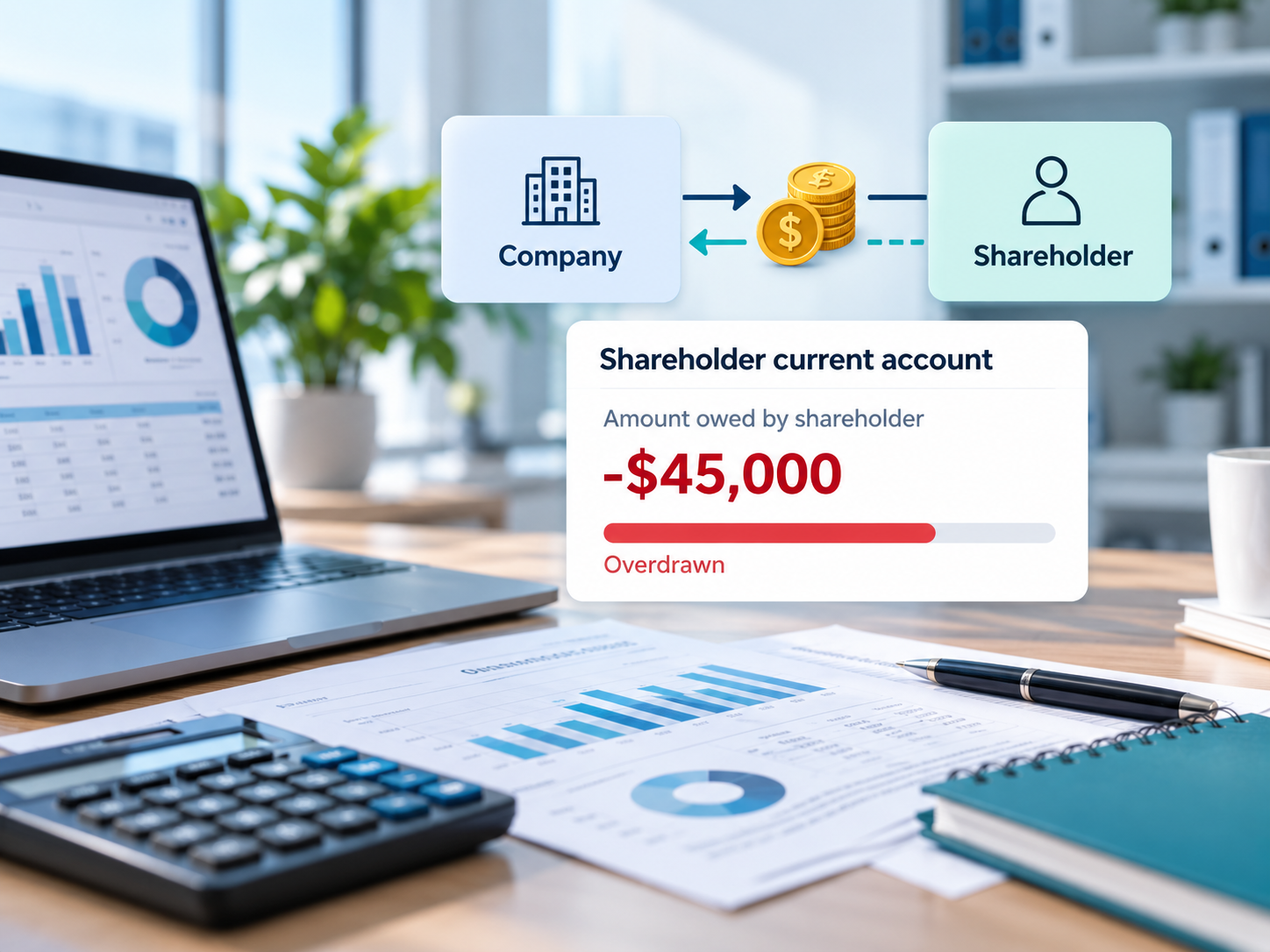
A shareholder current account records financial transactions between you and your company. It shows whether the company owes you money or you owe money to the company. Because the company is a separate legal entity, money in its bank account is not automatically your personal money.
What the account records
The account generally includes:
- funds introduced into the company;
- company expenses paid personally by a shareholder;
- drawings and personal expenses paid by the company;
- shareholder salary and dividends credited; and
- other amounts owing between the shareholder and company.
Credit balance: the company generally owes the shareholder money. Overdrawn balance: the shareholder owes the company money, effectively a loan from the company.
Drawings are not salary
Transferring money from the company to a personal account does not automatically make the payment salary or a deductible company expense. It is normally recorded as drawings against the shareholder current account. Salary or dividends credited later may reduce the amount owing.
If drawings exceed the salary or dividends the company can support, an overdrawn balance remains. The company cannot claim a tax deduction simply because the shareholder has withdrawn funds.
Why an overdrawn account matters
Short-term overdrawn balances are common and are not necessarily a problem. Risk increases where the balance becomes significant or grows each year, particularly if the shareholder does not have the personal funds to repay it.
Interest and tax consequences
- The company may charge interest at the prescribed or an appropriate market rate.
- Interest received is generally taxable to the company and is usually not deductible to the shareholder.
- Resident withholding tax and investment income reporting obligations may also arise.
- If no interest or insufficient interest is charged, fringe benefit tax or dividend implications may apply.
Overdrawn balances should therefore be identified and addressed as part of the company’s annual tax work.
Personal expenses paid by the company
Private costs paid from company funds cannot simply be claimed as business expenses. They may instead be charged to the shareholder current account, increasing the amount owed. Examples include:
- private travel and household expenditure;
- personal insurance;
- private vehicles or other personal assets; and
- other costs that are not genuinely business-related.
Small amounts can become significant when this continues over several years.
Review the account during the year
Do not wait until the annual accounts are prepared. If you withdraw money regularly, review:
- total drawings and the current account balance;
- the company’s expected profit;
- the likely shareholder salary or dividend available;
- personal spending paid through the business; and
- whether an overdrawn balance is increasing.
If drawings are running ahead of the income likely to be credited, early action may prevent the balance becoming difficult to manage.
Closing or removing a company
An outstanding shareholder loan does not disappear when a company is removed from the Companies Register. The Taxation (Budget Measures) Act 2026 introduced a specific rule dealing with outstanding company loans when a company is removed from the Companies Register. Under the new rule, qualifying amounts owed by shareholders, directors, and certain associated people can become taxable six months after the lending company is removed. The shareholder current account should therefore be reviewed and resolved as part of any wind-up or removal process.
Questions every shareholder should be able to answer
- Is my current account in credit or overdrawn?
- If overdrawn, how much do I owe the company and is the balance increasing?
- Are my drawings sustainable given the company’s profitability?
- Are interest and any related tax obligations being treated correctly?
- Are personal expenses being paid through the company?
- How would the balance be dealt with if the company were sold or wound up?
The key point
Shareholder current accounts are a normal part of an owner-managed company. The concern is allowing an overdrawn balance to grow without understanding the consequences or having a plan. Money taken from the company must be properly accounted for as salary, dividends, repayment of funds owed to the shareholder, or a loan. Regular review can stop a manageable issue becoming a significant tax or financial problem.