Employee or Contractor?

October 1, 2026


From 21 February 2026, New Zealand introduced a new gateway test to provide greater certainty about whether a worker is an employee or an independent contractor. The change is particularly relevant for businesses that engage contractors who work closely with the business or over an extended period.


The gateway test

A worker is treated as a specified contractor if every gateway criterion is met. The worker must:


  • have a written agreement stating that they are an independent contractor or are not an employee;
  • be allowed to work for another person, although not at the same time as working under the arrangement;
  • be able to choose when they work, or subcontract the work, subject only to limited vetting for matters such as legally required qualifications, role-specific qualifications or criminal history;
  • be able to decline additional work without the arrangement ending; and
  • have had a reasonable opportunity to obtain independent advice before entering into the agreement.


If all criteria are met, the worker is treated as a contractor for the purposes of the Employment Relations Act 2000.


If the gateway test is not met

Failing the gateway test does not automatically make the worker an employee. Instead, the common law test applies to determine the true nature of the relationship.


The common law assessment considers the arrangement as a whole, including:

  • what the parties intended;
  • how much control the business exercises and how independently the worker operates;
  • how integrated the worker is into the business; and
  • whether the worker is genuinely operating a business on their own account.


Why the distinction matters

Employees and contractors have different legal and tax treatment. The written agreement is important, but simply describing someone as a contractor will not be enough if the gateway test is not met and the working relationship indicates otherwise.


  • Employees are generally entitled to employment protections, including annual holidays, sick leave and minimum wage requirements.
  • Contractors are generally self-employed, invoice for their services and manage their own tax and ACC obligations.
  • Contractors are not covered by most employment legislation, although health and safety obligations apply to both employees and contractors.
  • An incorrect classification can create unexpected liabilities and disputes for both the business and the worker.


What businesses should review

Businesses using contractors should review both their agreements and the way each arrangement operates in practice. Check whether:


  • a current written contractor agreement is in place;
  • the agreement accurately reflects the day-to-day working relationship;
  • the contractor is genuinely free to work for others;
  • the contractor can choose when to work or subcontract the work within the permitted limits;
  • the contractor may decline additional work without the arrangement ending;
  • the contractor had a reasonable opportunity to obtain independent advice; and
  • all gateway criteria are met or, if not, the arrangement is supportable under the common law test.


Existing arrangements

The gateway test is not retrospective. For an arrangement that began before 21 February 2026, the common law test applies to the period before that date. From 21 February 2026, the gateway test can be considered first, with the common law test applying if any gateway criterion is not met.


A timely review

The new rules provide greater certainty, but they do not mean everyone currently described as a contractor will qualify as one. Arrangements warrant particular attention where a contractor works almost exclusively for one business or operates in a similar way to an employee. A focused review of the agreement and actual working practices can identify issues before they become a dispute.


October 1, 2026
Business resilience is the ability to continue operating, recover quickly and adapt when circumstances change. For SMEs, it does not require a complex contingency plan. It starts with understanding the business’s main vulnerabilities and taking practical steps to reduce them. Strengthen cashflow and financial visibility Build a cash reserve where possible. Consider how many months of essential costs the business could meet if revenue fell suddenly. Use cashflow forecasts to identify pressure points before they become urgent. Know the break-even point: the revenue required to cover costs, the margin available before losses arise, and which costs could be reduced quickly. Use monthly or quarterly management reports, budgets and forecasts to identify declining margins, rising costs, slow-paying customers and cashflow pressure early. Protect margins and manage debt Review pricing, labour costs, supplier costs and gross margins regularly. Small, regular price adjustments are often easier for customers to absorb than a large delayed increase. Understand total debt, repayment commitments and interest rates, and test whether the business could continue meeting these obligations if trading conditions weakened. Avoid using short-term borrowing to fund long-term problems. Reduce customer and supplier concentration Review how much revenue depends on one or two customers. Losing a major customer can have an immediate effect on cashflow and profitability. Diversify the customer base where practical and identify alternative suppliers for critical goods or services. Strengthen debtor management Set clear payment terms, invoice promptly and follow up overdue accounts consistently. Review aged receivables regularly, particularly customers whose balances are increasing or payment patterns are slowing. Consider deposits, progress payments or shorter payment terms where these would reduce risk. Reduce reliance on the owner and key staff Consider what would happen if the owner or a key employee could not work for four weeks or three months. Document key processes, contacts, approvals and system access so essential work can continue. Delegate responsibilities, cross-train staff and share critical knowledge rather than allowing it to sit with one person. Protect technology, information and operations Use secure passwords, multi-factor authentication, current software, regular backups and appropriate access controls. Plan how the business would operate temporarily if email, accounting software, customer records, equipment or premises became unavailable. Review insurance Review cover periodically so it reflects how the business now operates. Relevant policies may include material damage, business interruption, professional indemnity, cyber, key person and liability insurance. Prepare for the most serious disruptions Identify the few events that would have the greatest impact, such as losing a major customer, supplier, premises or key employee; owner illness; a technology outage; sharply rising costs; or a prolonged fall in demand. For each priority risk, record the immediate actions, key contacts, decision-making authority and temporary operating arrangements. Even a simple plan supports faster, calmer decisions. Keep the business model adaptable Regularly assess whether products, services and delivery methods remain relevant as markets, customer preferences and technology change. Consider additional income streams, recurring revenue, new customer groups or different service-delivery methods. Build resilience before you need it The best time to strengthen a business is when trading is sound. Cash reserves, healthy margins, manageable debt, documented systems and strong customer relationships provide options when conditions become difficult. A financially sound, well-managed and adaptable business is better placed to respond with confidence rather than react to each unexpected event.
October 1, 2026
Tax issues to think about early.... Expanding overseas can create opportunities, but also new tax and compliance obligations. These can arise before an overseas company is established. Selling to foreign customers, employing people offshore, holding stock overseas or opening an office can all change the tax position. Selling to overseas customers Exported goods and many services supplied to non-residents outside New Zealand may be zero-rated for GST, provided the relevant requirements are met. Overseas customers do not automatically give every transaction the same GST treatment. Confirm that the customer is genuinely non-resident and that the particular supply qualifies for zero-rating. Retain appropriate records supporting the customer’s overseas status and the GST treatment applied. Could another country tax the business? A New Zealand company is generally taxed here on its worldwide income. Another country may also tax income where the business has created a sufficient presence there. A permanent establishment may arise through a fixed place of business, such as an office, branch or workshop. Staff permanently based overseas or substantial activities in another country may trigger local registration, filing or tax payment obligations. The outcome depends on local law and any applicable double tax agreement. Employing someone overseas Hiring an employee who lives and works overseas can involve more than paying salary from New Zealand. Consider: local payroll registration and withholding tax; social security and employment law obligations; company or tax registrations; and whether the employee creates a permanent establishment. Advice should ideally be obtained before the employee starts work, when the arrangement can still be structured appropriately. Overseas contractors If an overseas contractor performs all work outside New Zealand and has no presence here, New Zealand non-resident contractor withholding rules generally do not apply. If the contractor works in New Zealand, payments may be subject to withholding tax, although exemptions or different rates may apply. Check the position before payment. Holding stock overseas Storing inventory in an overseas warehouse or fulfilment centre may improve delivery times, but can also trigger local income tax, GST, VAT or sales-tax obligations. Moving stock offshore is therefore both a logistics and a tax decision. Overseas GST, VAT and sales tax Depending on where and how the business sells, overseas registration may be required. This is particularly relevant for: online and e-commerce sales; digital services, software and subscriptions; and businesses holding inventory overseas. Double tax agreements and foreign tax credits New Zealand’s double tax agreements help determine which country may tax particular income and reduce the risk of double taxation. Foreign tax properly paid may also qualify for a New Zealand foreign tax credit. However, treaty and domestic rules must both be considered. A treaty does not automatically exempt overseas income from New Zealand tax. Management and company residence A New Zealand-incorporated company will generally remain New Zealand tax resident, but it may also become resident elsewhere depending on where directors exercise control, where central management occurs and the other country’s rules. This is especially relevant when owners or directors relocate overseas while continuing to manage the company. Foreign currency Exchange-rate movements between invoicing and payment can create foreign exchange gains or losses. Larger foreign currency balances, loans or long-term contracts may also engage the financial arrangement rules. Reliable accounting systems become increasingly important as transaction volumes grow. Check the tax position before acting Seek advice before: employing someone or opening an office overseas; Storing stock in another country; entering a major overseas contract; relocating key management; or sending employees or contractors across borders. Overseas growth is positive, but tax should be part of the planning. Ask where the business is operating, where its people work, where stock is held and which countries may now have taxing rights. Early advice can identify obligations and help structure expansion appropriately.
October 1, 2026
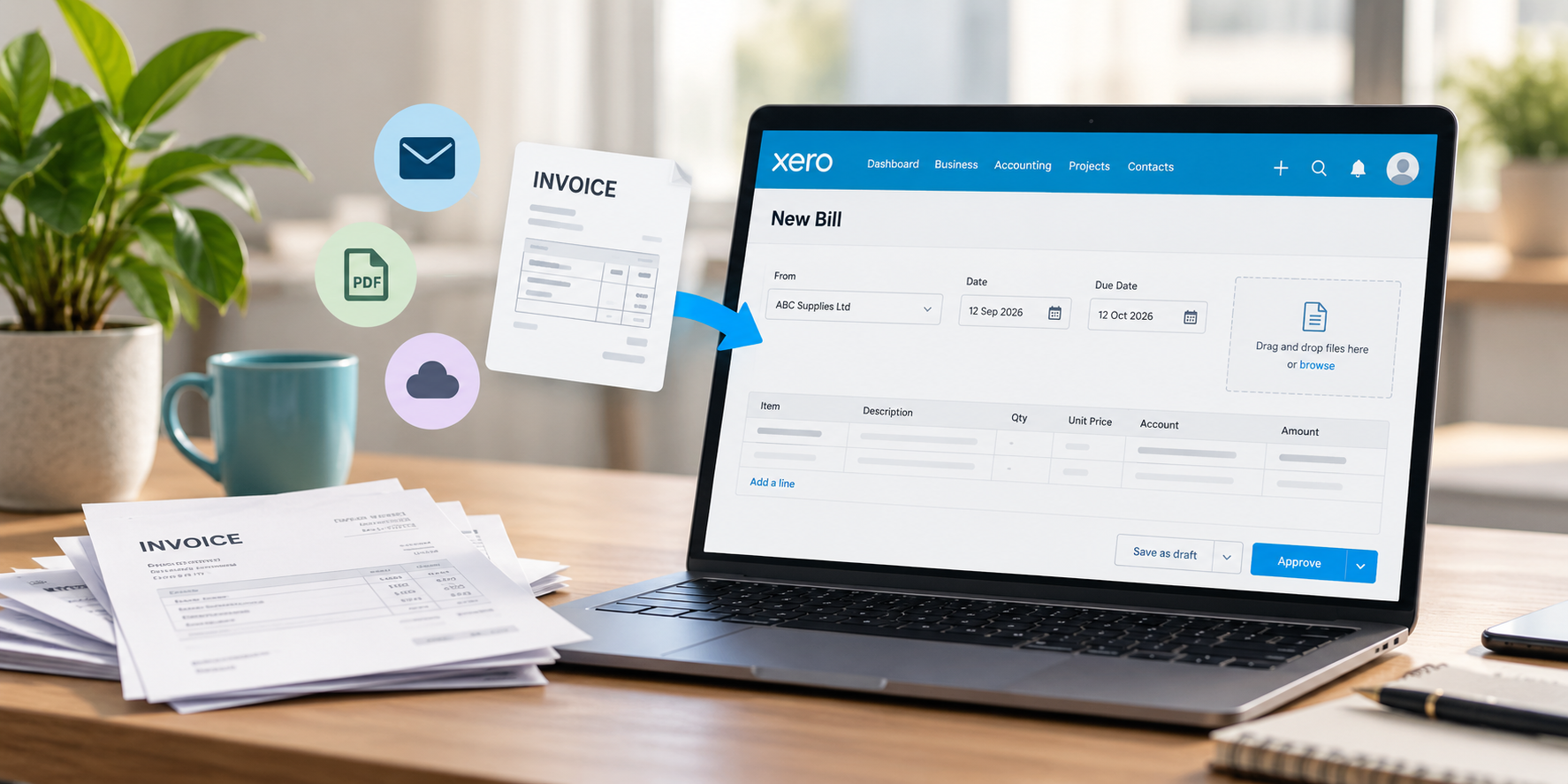
If you use Xero mainly to enter supplier invoices manually and reconcile the bank account, you may be doing more work than necessary. A few practical features can reduce data entry, improve visibility over upcoming payments and keep supporting documents attached to the accounting transaction. Upload supplier invoices Upload or drag and drop PDF, JPG or PNG invoices into Bills. Xero can extract key details and prepare a draft bill, with the original invoice attached. Always review the supplier, date, invoice number, amount, GST and coding before approval. Send bills directly to Xero Use your organisation’s unique bills email address to forward invoices into Xero. Regular suppliers can also send invoices there directly, with your normal email copied if you want visibility. The result is a draft bill ready for review rather than another attachment to save and re-enter. Keep supporting documents with the transaction Attaching the invoice to the Xero bill makes later review much easier. It helps when checking an expense or GST treatment, answering an accountant’s query, comparing previous costs, locating an older invoice or supporting records requested for review. Use document capture as part of your filing system Documents can be uploaded, emailed or captured on a mobile device. Keeping the source document close to the accounting entry avoids having invoices scattered across email, local drives, cloud folders and Xero. Handling each document fewer times creates a cleaner process. Photograph receipts promptly Use the Xero Accounting app to photograph paper receipts while you still have them. Review the extracted information before creating the transaction. This is useful for travel and smaller purchases and reduces reliance on receipts that may fade or be lost. Use repeating bills for regular expenses For predictable recurring costs such as rent, subscriptions and leases, a repeating bill can reduce repetitive entry where the accounting treatment is consistent. Check periodically that the amount and coding remain correct. Plan supplier payments Entering bills promptly provides a clearer view of what is owed and when payments fall due. Use bill status and planned payment dates to understand upcoming cash requirements rather than relying only on the current bank balance. Watch for duplicate bills Invoices may be entered twice when several people process accounts or a supplier resends a document. Xero can flag potential duplicates. Consistently using the Bills function provides stronger control than coding costs only when they appear in the bank feed. Process multiple supplier payments efficiently Depending on the banking setup, payment information can be exported from Xero and uploaded to online banking so several bills can be paid together. Xero can then help match and reconcile the payments, reducing manual entry of bank account numbers and amounts. A simple creditor workflow Supplier invoice is received and sent or uploaded to Xero. Xero prepares a draft bill with the source document attached. The business reviews the supplier, amount, GST, coding and date, then approves the bill. The approved bill appears in accounts payable and is scheduled for payment. Payment is made when due and reconciled against the bill. Small changes can make a meaningful difference The goal is not automation for its own sake . It is to reduce repeated handling and re-keying while maintaining good review controls. Look at each step in the purchase process and ask whether information that already exists electronically can be captured without typing it again. A few practical changes can make supplier invoice and payment processing simpler, faster and more reliable. If you would like help reviewing how your business processes supplier invoices and payments in Xero, talk to us.
October 1, 2026
A shareholder current account records financial transactions between you and your company. It shows whether the company owes you money or you owe money to the company. Because the company is a separate legal entity, money in its bank account is not automatically your personal money. What the account records The account generally includes: funds introduced into the company; company expenses paid personally by a shareholder; drawings and personal expenses paid by the company; shareholder salary and dividends credited; and other amounts owing between the shareholder and company. Credit balance: the company generally owes the shareholder money. Overdrawn balance: the shareholder owes the company money, effectively a loan from the company. Drawings are not salary Transferring money from the company to a personal account does not automatically make the payment salary or a deductible company expense. It is normally recorded as drawings against the shareholder current account. Salary or dividends credited later may reduce the amount owing. If drawings exceed the salary or dividends the company can support, an overdrawn balance remains. The company cannot claim a tax deduction simply because the shareholder has withdrawn funds. Why an overdrawn account matters Short-term overdrawn balances are common and are not necessarily a problem. Risk increases where the balance becomes significant or grows each year, particularly if the shareholder does not have the personal funds to repay it. Interest and tax consequences The company may charge interest at the prescribed or an appropriate market rate. Interest received is generally taxable to the company and is usually not deductible to the shareholder. Resident withholding tax and investment income reporting obligations may also arise. If no interest or insufficient interest is charged, fringe benefit tax or dividend implications may apply. Overdrawn balances should therefore be identified and addressed as part of the company’s annual tax work. Personal expenses paid by the company Private costs paid from company funds cannot simply be claimed as business expenses. They may instead be charged to the shareholder current account, increasing the amount owed. Examples include: private travel and household expenditure; personal insurance; private vehicles or other personal assets; and other costs that are not genuinely business-related. Small amounts can become significant when this continues over several years. Review the account during the year Do not wait until the annual accounts are prepared. If you withdraw money regularly, review: total drawings and the current account balance; the company’s expected profit; the likely shareholder salary or dividend available; personal spending paid through the business; and whether an overdrawn balance is increasing. If drawings are running ahead of the income likely to be credited, early action may prevent the balance becoming difficult to manage. Closing or removing a company An outstanding shareholder loan does not disappear when a company is removed from the Companies Register. The Taxation (Budget Measures) Act 2026 introduced a specific rule dealing with outstanding company loans when a company is removed from the Companies Register. Under the new rule, qualifying amounts owed by shareholders, directors, and certain associated people can become taxable six months after the lending company is removed. The shareholder current account should therefore be reviewed and resolved as part of any wind-up or removal process. Questions every shareholder should be able to answer Is my current account in credit or overdrawn? If overdrawn, how much do I owe the company and is the balance increasing? Are my drawings sustainable given the company’s profitability? Are interest and any related tax obligations being treated correctly? Are personal expenses being paid through the company? How would the balance be dealt with if the company were sold or wound up? The key point Shareholder current accounts are a normal part of an owner-managed company. The concern is allowing an overdrawn balance to grow without understanding the consequences or having a plan. Money taken from the company must be properly accounted for as salary, dividends, repayment of funds owed to the shareholder, or a loan. Regular review can stop a manageable issue becoming a significant tax or financial problem. 
July 1, 2026
Cash flow is often the difference between a business that thrives and one that struggles. Many profitable businesses experience financial pressure simply because cash is not arriving when it is needed. The good news is that cash flow problems are often preventable. By monitoring a few key areas and acting early, business owners can significantly improve their financial position and reduce stress. 1. Strengthen Your Debtor Management One of the most common causes of cash flow pressure is slow-paying customers. Many business owners are reluctant to follow up overdue accounts, but every dollar sitting in debtors is money unavailable to pay wages, suppliers, tax obligations, or invest back into the business. Consider the following: Invoice promptly after work is completed. Clearly state payment terms on invoices. Send automated reminders before invoices become overdue. Follow up overdue accounts with a phone call rather than relying solely on email. Require deposits for larger projects. Review customer credit limits regularly. Even reducing your average collection period by a few days can have a significant impact on available cash. 2. Set Aside Money for Tax Before It Is Due Many businesses find themselves under pressure when GST, PAYE, or provisional tax falls due because the funds have already been spent. A simple but effective strategy is to maintain a separate tax savings account and transfer money into it regularly. For example: GST registered businesses can transfer the GST component of sales into a separate account. Employers can set aside PAYE and KiwiSaver deductions immediately after each payroll. Businesses can estimate their income tax liability throughout the year and save towards it monthly. Treating tax as money that belongs to Inland Revenue rather than part of working capital can prevent unpleasant surprises and reduce the need for payment arrangements later. 3. Manage Working Capital Carefully Working capital is the cash tied up in debtors, stock, and short-term business operations. Business owners often focus heavily on sales growth without considering the impact on cash flow. Key areas to monitor include: Stock Levels Excess stock ties up cash and may become obsolete. Review inventory regularly and identify slow-moving items. Creditor Terms Take advantage of supplier payment terms where appropriate, but maintain good relationships with key suppliers. Project Management For service businesses, ensure work is billed as it progresses rather than waiting until completion. Regular Cash Flow Forecasting A simple 13-week cash flow forecast can identify future shortfalls before they become critical. Businesses that forecast cash flow are generally able to make better decisions regarding staffing, purchasing, and investment. 4. Recognise the Early Warning Signs Cash flow problems rarely appear overnight. Common warning signs include: Constantly using overdraft facilities. Struggling to pay suppliers on time. Increasing use of credit cards to fund operations. Delaying GST or PAYE payments. Owner drawings continuing despite declining profitability. A growing debtor balance. Regular requests from creditors for payment. The earlier these issues are identified, the more options are available to address them. Many business failures occur not because the business is unprofitable, but because warning signs were ignored for too long. 5. Set Up Inland Revenue Arrangements Early If a business is unable to pay tax on time, it is generally better to contact Inland Revenue early rather than wait for debt collection action. Inland Revenue will often consider instalment arrangements where a business is experiencing temporary cash flow difficulties. Benefits of acting early include: Greater flexibility in repayment options. Reduced risk of enforcement action. Better management of cash flow. Improved ability to meet future tax obligations. However, payment arrangements should be viewed as a temporary solution rather than an ongoing funding source for the business. If tax debt is becoming a recurring issue, it is important to understand the underlying cause and implement long-term improvements to cash flow management. Final Thoughts Strong cash flow management is not about complicated financial strategies. It is about maintaining good business disciplines: Collect debtors promptly. Save for tax obligations. Monitor working capital. Watch for warning signs. Address problems early. Regular management reporting and cash flow forecasting can provide valuable insights and help business owners make informed decisions before issues become serious. If you would like assistance reviewing your business cash flow, forecasting future cash requirements, or managing tax obligations, the team at McIsaacs would be happy to help.
July 1, 2026
One of the biggest differences we see between businesses that thrive and those that struggle is visibility. Put simply—if you don’t have up-to-date financial information and a clear plan, it’s very difficult to make confident decisions. Regular reporting and budgeting aren’t just compliance exercises. They’re tools that help you actually run your business. Good reporting gives you a clear picture of where things stand right now. Are you profitable? Is cash flow tight? Are costs creeping up? Without regular reporting, these issues often go unnoticed until they become a problem. Budgeting, on the other hand, is about looking forward. It helps you set targets, plan for growth, and understand what needs to happen financially to achieve your goals. A well-prepared budget becomes a benchmark—you can track how you’re performing and make adjustments early, rather than reacting after the fact. When reporting and budgeting work together, you move from being reactive to proactive. This is where a Virtual CFO can add real value. A Virtual CFO goes beyond traditional compliance and annual accounts. The focus is on helping you understand your numbers, plan ahead, and make informed decisions throughout the year—not just at balance date. In practical terms, a Virtual CFO can help with: Regular management reporting (monthly or quarterly) so you know exactly how your business is performing Developing and maintaining budgets and forecasts Cash flow planning to avoid surprises Identifying trends, risks, and opportunities early Providing strategic input around growth, pricing, and costs Acting as a sounding board for business decisions For many businesses, having a full-time CFO isn’t realistic. A Virtual CFO gives you access to that level of insight and support in a flexible and cost-effective way. We often find that once clients start receiving regular reports and working with a budget, their confidence improves significantly. They feel more in control, are able to make decisions faster, and can see issues coming before they become serious problems. As accountants, our role isn’t just to prepare accounts after the fact—it’s to help you understand what the numbers mean and how to use them to move your business forward. Our Directors and Associate Directors are available to assist clients with management reporting, budgeting, and Virtual CFO services. If you’d like to get better visibility over your business and plan ahead with confidence, feel free to get in touch.
July 1, 2026
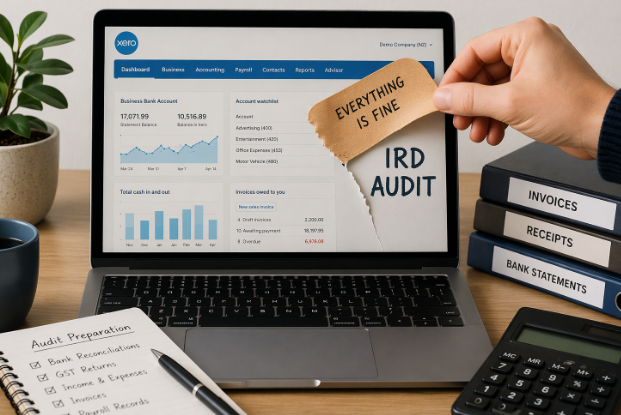
Inland Revenue has made it clear that compliance activity is increasing. With additional funding, enhanced data-matching capabilities, and access to more information than ever before, IRD is identifying discrepancies and compliance issues much faster than in previous years. While most business owners aim to meet their obligations correctly, even minor errors can result in interest, penalties, reviews, or audits. Many reviews begin because something reported in a tax return simply doesn't look right when compared with previous years, industry benchmarks, or information received from other sources. Significant GST refunds, repeated business losses, inconsistent reporting patterns, and a history of late filing or payment can all attract additional attention. A review does not necessarily mean that a business has done something wrong, but it does mean that IRD may ask questions and expect supporting documentation. Some of the most common issues arise in the areas of GST and payroll. Businesses can inadvertently claim GST on expenses that do not qualify, fail to account for private use adjustments, incorrectly treat certain transactions or Fringe Benefit Tax obligations are not correctly calculated. Small errors repeated over time can become significant amounts, making regular reviews of accounting and payroll systems an important part of managing risk. Underlying all of these areas is the importance of good record-keeping. Accurate records remain one of the best protections against compliance problems. Businesses should ensure they retain invoices, receipts, bank statements, payroll records, loan documentation, and evidence supporting deductions claimed in their tax returns. Well-maintained records not only make compliance easier but also allow questions from Inland Revenue to be answered quickly and confidently. The reality is that Inland Revenue's increased compliance activity is unlikely to slow down. The businesses that experience the fewest problems are generally those that maintain accurate records, review their systems regularly, seek advice when needed, and address issues before they become significant. It may be a good time to consider Audit Shield Insurance which we offer to our clients. It covers the professional fees incurred as a result of an IRD review or audit activity of any tax type. It also covers previously lodged returns. Please contact us if you would like a quote for Audit Shield Insurance. 
July 1, 2026
Succession planning often sits in the “too hard” basket. If it has crossed your mind, it’s likely crossed your family’s mind too—but no one wants to be the first to raise it. We see this all the time. There’s an “elephant in the room” dynamic, driven by a few common barriers: Children don’t want to appear focused on money or raise their parents’ mortality Parents don’t want to talk about their own mortality Concerns about fairness between family members Fear of creating conflict Feeling overwhelmed or not ready to step back What’s interesting is that none of these challenges are financial or legal—they’re emotional. That’s why the most successful succession plans start with the people side. Before jumping into structures and tax outcomes, families need open, guided conversations to work through expectations, concerns, and assumptions (many of which turn out to be incorrect). This is where an experienced accountant who is a family business specialist can add real value. They help facilitate discussions, keep things moving, and translate advice between your lawyer, and other advisors. Once there’s alignment, your professional team can step in with the right technical structure and implementation. A good succession process needs to strike a balance between confidentiality and transparency, which requires trust and careful handling. If the emotional side isn’t addressed properly, even the best technical plan can fail—leading to tension, breakdowns in relationships, and risk to the business itself. The key takeaway? Start the conversation early. With the right support, succession planning doesn’t have to be overwhelming—and getting it right protects both your family and your business for the future. 
July 1, 2026
If you’ve ever dealt with Fringe Benefit Tax (FBT), you’ll know it can be one of the more frustrating parts of running a business. Between tracking vehicle use and keeping logbooks, it’s not exactly straightforward. The Government is looking to change that, with proposed changes expected to apply from 1 April 2027. At this stage though, it’s important to stress that these are still proposals only. The legislation hasn’t been finalised, and the details could change before anything becomes law. So for now, there’s nothing you need to do differently — but it’s worth understanding what’s being considered. The main focus of the proposed changes is how FBT applies to company vehicles. Under the current rules, you need to determine whether a vehicle is available for private use, which often means keeping detailed records, tracking days, and in many cases maintaining logbooks. It can be time-consuming and tedious. The proposal is to introduce a simpler, category-based system. Rather than tracking actual usage, vehicles would be grouped based on how they are generally used, and a set percentage would be applied. The proposals are: Category Type of Use Indicative FBT Treatment Full private use Vehicle is essentially provided as a perk 100% taxable Partial private use Mainly business use, but some personal use allowed ~35% taxable Minor private use Limited to commuting or very minor personal use Reduced rate (around 20%) No private use Pool vehicles or strictly business use only 0% taxable The idea is that instead of tracking usage throughout the year, you would assign a category when the vehicle is provided and only revisit it if the use changes. From a compliance point of view, this would remove the need for logbooks and day-by-day tracking, which will be appealing for many businesses. That said, while the rules may become simpler, they won’t necessarily produce a better tax outcome for everyone. Standardised percentages mean some businesses could end up paying more FBT than they do under the current approach, particularly where private use is low and well documented. There’s also a bit more judgement involved upfront in deciding which category a vehicle falls into. It’s also worth highlighting these proposed changes don’t affect all businesses in the same way. For close companies with shareholder-employees, the existing option of using a logbook and apportioning vehicle costs between business and private use is still available. This approach can allow you to avoid FBT entirely and instead claim deductions based on actual usage, which for some remains a more practical and tax-efficient method where private use is minimal. You might find it useful to start thinking about how your vehicles are currently used and where they might sit under the new categories, but there’s no need to make any changes until the rules are finalised. Overall, these proposals are part of a broader push to simplify FBT, which is something most businesses will welcome. Whether it results in a better outcome will depend on your specific situation, so it will be worth reviewing things carefully once we have confirmed legislation. We’ll continue to share updates as more detail becomes available.
July 1, 2026
Budget 2026 included a number of proposed changes to donation tax credits, which may affect both donors and charities from 1 April 2027 . As with many Budget announcements, these changes are not yet finalised , so it’s a case of staying informed for now rather than making any immediate changes. At a high level, the Government is looking to tighten the rules for larger donations , while also making it easier for donors to access and use their credits. One of the most talked-about changes is the introduction of a maximum entitlement . Currently, individuals can claim a donation tax credit of 33⅓% of their donations, up to the level of their taxable income. The proposal introduces a cap so that donations eligible for the credit are limited to the lower of $100,000 or the donor’s taxable income . This effectively limits the maximum annual refund to $33,333.33 . For most people, this won’t make much difference. However, it will impact individuals making large one-off or high-value donations , as any amount above the cap will no longer generate a tax credit. Alongside the cap, there are also proposals aimed at improving how and when donation tax credits are received. One of these is the ability to receive in-year refunds . At the moment, most donation tax credits are claimed after the end of the tax year. The proposed change would allow credits to be refunded during the year the donation is made , improving cashflow for donors. Another proposal is to allow donors to transfer their tax credit directly to the charity . In practice, this would mean the benefit of the tax credit could go straight to the organisation, rather than being refunded to the individual first. This is intended to simplify the process and could also help charities receive funding sooner. Taken together, these changes reflect a shift in how the Government is approaching charitable giving. There’s a clear focus on limiting the fiscal cost of large claims , while also making the system more flexible and accessible for everyday donations. At this stage, the key takeaway is that these changes are still proposed and subject to change . If they go ahead, the impact will likely be limited for most donors, but those making larger donations, or charities relying on them, may need to rethink their approach.